X

Ready for real training?

Whether we’re your first choice or a last resort, Koru K9 will ensure that your canine companion is the perfect addition to your pack.
  • Home
  • Blog
  • Dog Behavior Training in Seattle: Beyond Basic Obedience

Dog Behavior Training in Seattle: Beyond Basic Obedience

dog behavior training

Our Newsletter

Sign-up to get the latest news.

This field is for validation purposes and should be left unchanged.

Dog Behavior Training in Seattle: Beyond Basic Obedience

Many owners eventually realize that basic obedience alone doesn’t solve deeper behavior issues. A dog may know commands perfectly at home, but still struggle with anxiety, reactivity, impulsiveness, overstimulation, or aggression in everyday life.

Your dog may know how to sit. They may even know down, stay, and place. But when life gets real, the behavior falls apart.

They bark at guests. Lunge on leash. Guard food or furniture. Panic in the crate. React to dogs. Ignore commands outside. Snap when pressured. Pull like a freight train. Melt down in busy environments.

That is where dog behavior training comes in.

Dog behavior training looks at the bigger picture: your dog’s state of mind, structure, triggers, household patterns, impulse control, confidence, and communication.

At Koru K9, our Seattle dog training programs help dogs who need more than a few commands.

Ready to Build Better Behavior With Your Dog?

If you’re struggling with reactivity, aggression, or stressful walks in Seattle, Koru K9 can help.

Obedience vs. Behavior Training

Obedience teaches specific skills.

Examples include:

  • Sit
  • Down
  • Stay
  • Come
  • Heel
  • Place
  • Leave it

Behavior training addresses the patterns behind the problem.

Examples include:

  • Reactivity
  • Aggression
  • Fear
  • Anxiety
  • Resource guarding
  • Poor impulse control
  • Household chaos
  • Leash explosions
  • Crate issues
  • Overstimulation
  • Conflict between dogs

Obedience is often part of behavior training, but it is not the whole thing.

A dog can know commands and still make poor choices when stressed, excited, scared, or overstimulated.

Signs Your Dog Needs Behavior Training

Your dog may need behavior training if:

  • Walks are stressful
  • Your dog reacts to dogs or people
  • Guests cannot come over peacefully
  • Your dog guards food, toys, furniture, or people
  • Your dog has bitten or snapped
  • Your dog panics in the crate
  • Your dog cannot settle
  • Your dog ignores you around distractions
  • Your dog is anxious, fearful, or insecure
  • You feel like basic training has not been enough

If the problem is affecting your daily life, it is worth getting help.

Our Seattle Dog Training Programs

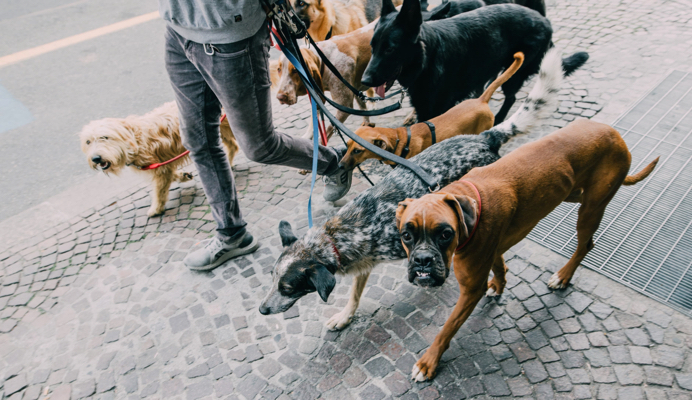
A Man Walking a Group of Dogs on a Leash

Dog Board & Train

Our trainers train your dog in their homes and real-world locations. This is a true “reset” and an excellent option for clients with less time to commit to a behavior modification training program or have a dog(s) with moderate to severe behaviors.

Man Standing By Lake Feeding Black Lab A Treat

Hybrid Training

The best of both worlds! With a combination of both our In-Home and Board & Train programs, this fits any training goal or behavior with a foundational reset, then in-home sessions to incorporate what we have taught your dog into your life.

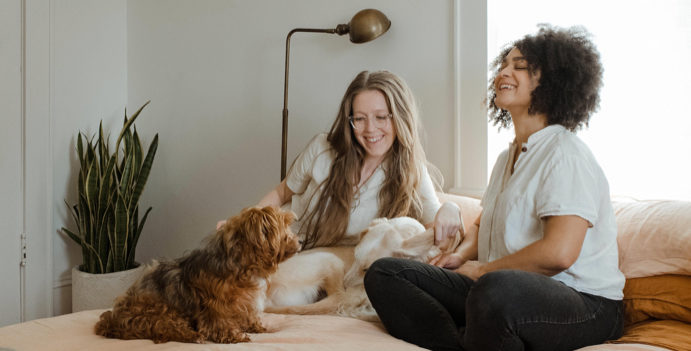
A Couple of Women Sitting on Top of a Bed With Two Dogs

In-Home Private Dog Training

For owners who want to be fully immersed in the process and those whose dogs have lower-level behaviors and/or obedience issues, we teach you how to be a better handler for your dog by training you and your dog in your home and providing you.

Why Behavior Problems Happen

Behavior problems can come from many places.

Some dogs lack structure. Some lack confidence. Some have genetics working against them. Some have had bad experiences. Some are overstimulated. Some have learned that certain behaviors work.

A dog who barks at guests may be fearful, territorial, excited, or lacking boundaries.

A dog who lunges at other dogs may be frustrated, insecure, aggressive, or overwhelmed.

A dog who guards food may be anxious, possessive, or responding to a history of conflict.

The behavior matters, but the reason behind it matters too.

Good training looks at both.

Why Seattle Dogs Need Real-Life Skills

Seattle dogs are exposed to a lot.

Apartment buildings, elevators, dog-friendly neighborhoods, trails, rain, traffic, busy sidewalks, visitors, parks, patios, and other dogs everywhere.

Your dog does not need training that only works in a quiet room.

Your dog needs skills that work in your actual life.

That may mean learning how to:

  • Walk calmly around distractions
  • Settle when guests arrive
  • Respond around other dogs
  • Relax in the home
  • Handle city sounds
  • Move through tight spaces
  • Follow direction when excited
  • Recover after stressful moments

Behavior training should make life feel more manageable, not just make your dog look good during a lesson.

The Role of Structure

Structure is one of the biggest missing pieces for many dogs.

Structure gives your dog clarity.

It may include:

  • Crate training
  • Place command
  • Leash rules
  • Doorway manners
  • Feeding routines
  • Calm greetings
  • Supervised freedom
  • Clear expectations
  • Consistent follow-through

Structure does not mean your dog never gets freedom or fun. It means freedom is earned and guided.

Many behavior issues improve when the dog has a clearer daily routine and better leadership from the humans in the home.

The Role of Confidence

Some behavior problems are rooted in insecurity.

A fearful or anxious dog may bark, growl, hide, avoid, lunge, or shut down. These dogs need confidence-building, clear communication, and carefully structured exposure.

Confidence does not come from forcing a dog into overwhelming situations.

It comes from helping the dog succeed at the right level, then gradually building from there.

The Role of Accountability

Dogs need to understand both what to do and what not to do.

That is not mean. That is communication.

A balanced training plan gives the dog clear guidance, rewards good choices, interrupts unwanted behavior when appropriate, and creates consistency.

When dogs understand the rules, many become calmer.

Unclear expectations create stress for dogs and humans.

Behavior Training for Reactivity

Reactive dogs may bark, lunge, growl, or lose control around triggers.

Behavior training for reactivity may include leash handling, obedience, controlled exposure, threshold work, structure, and owner coaching.

If your dog is reactive in Seattle, our training can help you build a plan that works in real life.

Behavior Training for Aggression

Aggression needs careful handling.

If your dog has bitten, snapped, guarded, or made you feel unsafe, professional support is important.

Our Seattle aggressive dog training focuses on safety, management, structure, and practical behavior change.

Behavior Training for Anxiety and Fear

Anxious dogs need more than comfort.

They need structure, confidence-building, predictable routines, and clear communication.

Training can help dogs become more stable by reducing chaos, building skills, and teaching owners how to support the dog without accidentally reinforcing instability.

Is Board and Train Good for Behavior Issues?

For many (most) dogs, yes. Koru K9’s Seattle Board & Train can be helpful when behavior issues require daily structure and professional handling.

This can be especially useful for:

  • Reactivity
  • Aggression
  • Anxiety
  • Leash pulling
  • Poor impulse control
  • Dogs who need a reset
  • Dogs who have not improved with weekly lessons

But owner transfer matters. Your dog needs consistency after they come home.

Dog Behavior Training Should Include the Owner

Your dog is only one half of the equation.

Owners need to learn how to:

  • Read body language
  • Handle the leash
  • Create structure
  • Follow through
  • Use commands correctly
  • Manage triggers
  • Prevent rehearsal of bad habits
  • Maintain progress

That is why Koru K9 focuses on owner education. We want you to understand your dog, not just outsource the problem.

Get Dog Behavior Training in Seattle

If your dog is struggling with reactivity, aggression, anxiety, fear, or behavior problems that basic obedience has not solved, Koru K9 can help.

We serve Seattle, Tacoma, Bellevue, Everett, Olympia, and surrounding areas.

Ready to get help? Explore our Seattle dog training programs or learn more about our Seattle Board & Train program.

Ready for More Than Basic Obedience?

Real-world training for real-life behavior challenges.

Koru K9 helps dogs and owners across Seattle, Tacoma, Bellevue, Everett, Olympia, and surrounding areas. Whether you’re dealing with reactivity, anxiety, aggression, or ongoing obedience struggles, Koru K9 helps dogs and owners create calmer, safer, and more manageable everyday lives together.

We help any dog, any breed, any behavior challenge. Wherever you are, our expert dog training team is here to help transform your dog and your life. 

FAQs About Dog Behavior Training in Seattle

What is dog behavior training?

Dog behavior training addresses problem behaviors like reactivity, aggression, anxiety, fear, guarding, and poor impulse control. It goes beyond basic obedience.

Is a dog behaviorist the same as a dog trainer?

Not always. People use the terms differently. The most important thing is finding someone experienced with your dog’s specific behavior problem.

Can behavior training help aggression?

Yes, absolutely! But aggression needs to be taken seriously. Dogs who bite, snap, lunge, guard resources, or make people feel unsafe need a professional training plan. The goal is to improve safety, communication, structure, and manageability.

Does my dog need obedience or behavior training?

If your dog only needs basic skills, obedience may be enough. If your dog is reactive, aggressive, anxious, fearful, or unsafe, behavior training is usually more appropriate.

Do you train dogs outside of Seattle?

Yes. Koru K9 serves Seattle, Tacoma, Bellevue, Everett, Olympia, and surrounding areas. You can view available regions on our dog trainer locations page.

author avatar
Website Pawtal

Like this post?

Share

Know someone who would like this content?
Send this post to them or share it to your feed.