


How to Know Your Dog Is Truly Happy You’re Home: A Trainer’s Guide to Understanding Canine Joy
When you walk through the door and your dog greets you like you’ve been gone for a decade, it feels like one of the purest joys of dog ownership. Recently, I shared expert insight with Parade Pets on how dogs express happiness during those homecoming moments — and why these behaviors matter more than most people realize.
At Koru K9, our training philosophy is built around understanding the dog in front of you. And knowing how your dog communicates joy is a powerful part of that relationship. These moments don’t just feel good — they tell you a lot about your dog’s emotional state, confidence, and connection with you.
Here’s how to interpret the most common signs your dog is genuinely happy you’re home… and how you can use this knowledge to strengthen your bond.
1. The Full-Body Tail Wag
A loose, sweeping wag that starts at the hips is one of the clearest indicators of joy. This is not a “just saying hi” invitation — it’s full-on emotional relief and excitement.
What it means:
Your dog feels safe, secure, and genuinely happy to reconnect.
2. The Wiggle-Butt Greeting
Some dogs wag so hard their entire back end joins in. This level of softness and wiggle tells you your dog is calm, friendly, and comfortable.
Why it matters in training:
A relaxed, wiggly dog is in the perfect state of mind for connection — not just compliance.
3. Bringing You Their Favorite Toy
This is more than play. Dogs don’t share prized items with just anyone.
The deeper meaning:
Your dog trusts you, wants to interact, and sees you as a valued partner — not just a food source.
4. The Zoomies (AKA “Welcome Home Chaos”)
Those wild bursts of energy are a release of built-up anticipation. They’re not misbehavior — they’re joy in motion.
Trainer insight:
Paired with structure, zoomies are harmless. Without it, they can turn into jumping, mouthing, or overstimulation. A calm, consistent homecoming routine helps keep the excitement healthy.
5. Whining, Barking, or Happy Vocalization
A little noise doesn’t automatically mean stress. Some dogs “talk” when emotions run high.
What to look for:
Soft, high-pitched sounds + relaxed body = excitement.
Sharp, tense barking + stiff posture = stress.
6. Following You From Room to Room
This isn’t always anxiety — often it’s just reconnection.
What it means:
Your dog is re-anchoring themselves to their safe person. They’re simply checking in.
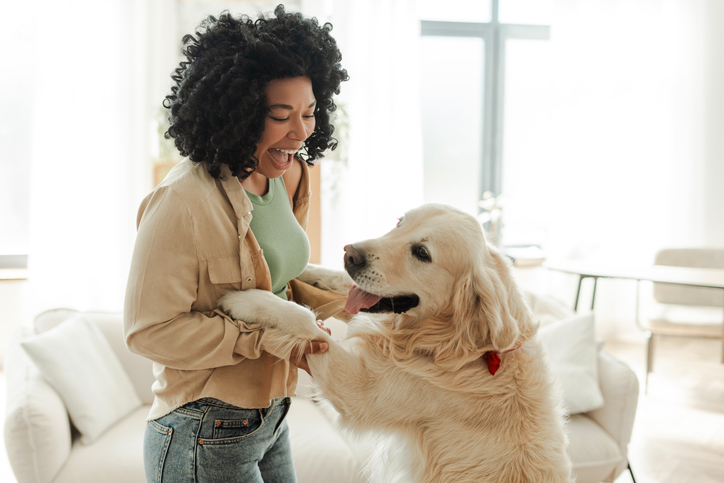
7. Leaning, Pawing, or Pressing Their Head Into You
These gestures are deeply affiliative — the canine version of a hug.
Important reminder:
Affection is powerful, but timing matters. Reward calm, grounded behavior instead of frantic energy.
So… What Should You Do During That Happy Greeting?
At Koru K9, we always emphasize state of mind over commands. When you walk in the door:
-
Stay calm
-
Avoid high-pitched, frantic greetings
-
Give your dog a moment to settle
-
Reward calm connection
-
Create a consistent routine so your dog knows what to expect
These small steps create a more confident, less anxious, and more responsive dog in the long run.
Why Understanding These Behaviors Matters
Joy, excitement, vocalization, wiggling — these are windows into your dog’s emotional world. When you understand your dog’s signals, you build more than obedience. You build relationship.
This is the heart of what we do at Koru K9.
Balanced, relationship-based training — any dog, any breed, any problem — starts with understanding the dog’s state of mind. A happy homecoming is one of the clearest glimpses you’ll ever get.
Read the full Parade Pets feature here:
👉 https://paradepets.com/dogs/signs-your-dog-is-happy-youre-home
Want to Strengthen Your Bond Even More?
If you want a deeper connection, better communication, or help resolving behavior challenges, our trainers are here to help.
👉 Learn how our training programs work at KoruK9.com or contact us today to start your dog’s transformation.
