


Reactive Dog Training in Seattle: What Actually Helps?
Living with a reactive dog can feel exhausting. Many owners begin avoiding walks, crossing streets to avoid triggers, declining social outings, or feeling constantly tense every time they leave the house with their dog. Over time, that stress affects both the owner and the dog.
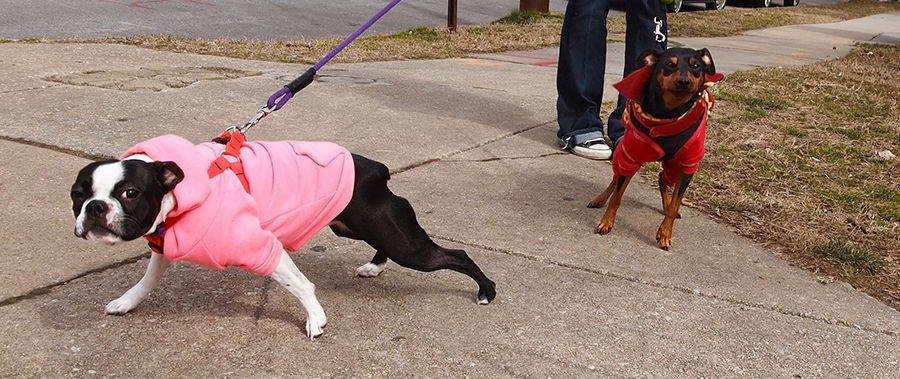
You plan your walks around other dogs. You scan every sidewalk before turning a corner. You avoid busy parks, apartment hallways, patios, trails, and anywhere your dog might lose it. One second everything is fine, and the next your dog is barking, lunging, growling, spinning, pulling, or completely tuning you out.
It can make you feel embarrassed, frustrated, and honestly, trapped.
But reactivity is not hopeless. Your dog is not broken. And you do not have to keep white-knuckling your way through every walk.
Reactive dog training is not about forcing your dog to “be friendly” or pretending the behavior does not exist. It is about creating structure, improving communication, building better handling skills, and helping your dog learn how to make better choices around triggers.
At Koru K9, our Seattle dog training programs help reactive dogs throughout Seattle, Tacoma, Bellevue, Everett, Olympia, and surrounding areas.
Ready to Make Walks With Your Dog Enjoyable?
If you’re struggling with reactivity, or stressful walks in Seattle, Koru K9 can help.
What is Leash Reactivity in Dogs?
Leash reactivity usually means a dog has an intense response to a trigger.
Common triggers include:
- Other dogs
- People
- Bikes
- Skateboards
- Cars
- Children
- Delivery drivers
- Strangers entering the home
- Sounds
- Movement
- Tight spaces
- Leash pressure
Reactive dogs may bark, lunge, growl, whine, scream, pull, jump, spin, or freeze. Some dogs are reactive because they are fearful. Some are frustrated. Some are insecure. Some have poor impulse control. Some have learned that big reactions make scary things move away.
The behavior can look dramatic from the outside, but underneath it there is usually a dog who does not know how to handle what is happening.
Why Seattle Can Be Hard for Reactive Dogs
Seattle can be a tough place for a reactive dog.
There are narrow sidewalks, busy neighborhoods, apartment buildings, elevators, off-leash dogs, patios, trails, and a lot of people who think their friendly dog should be allowed to say hello.
For a reactive dog, that can feel like too much input with too little space.
Your dog may be fine at home, but the second you step into Capitol Hill, Ballard, Queen Anne, Bellevue, Tacoma, or a busy neighborhood park, everything falls apart.
That does not mean your dog is trying to be difficult. It means the environment is exposing gaps in your dog’s training, confidence, impulse control, or coping skills.
What Does Not Help Reactivity
Before we talk about what works, let’s talk about what usually does not.
Avoiding Everything Forever
Avoidance can be necessary short-term, especially if your dog is unsafe or over threshold. But if the only strategy is avoiding every trigger forever, your dog does not learn anything new.
You may need distance and management at first, but the goal is to create progress, not build your whole life around avoidance.
Letting Dogs “Work It Out”
This can be dangerous. Reactive dogs do not need to be thrown into situations they cannot handle. Flooding a dog with triggers often makes the behavior worse.
Relying on Treats Alone
Food can be useful, but if your dog is already over threshold, they may not take food or may take it without actually changing their emotional state or behavior.
Treats are a tool. They are not a complete training plan.
Only Teaching Commands
Commands matter, but reactivity is not fixed by “sit” alone.
A dog can know how to sit and still explode at the sight of another dog. Reactive dog training has to address the dog’s mindset, structure, handling, thresholds, and daily patterns.
What Actually Helps Reactive Dogs?
Reactive dog training needs a full plan.
That plan usually includes structure, obedience, leash handling, confidence-building, exposure work, clear communication, and owner coaching.
1. Better Structure at Home
Reactivity does not only happen outside.
Many reactive dogs are also struggling with impulse control, boundaries, and overstimulation at home. If your dog has no structure inside the house, it is harder to expect calm outside the house.
Structure may include:
- Crate training
- Place command
- Calm routines
- Clear rules around doors
- Better leash manners
- Less free access to windows or fence lines
- Calm greetings
- More predictable expectations
This does not mean your dog’s life becomes strict and joyless. It means your dog gets clarity.
Dogs do better when they understand what is expected.
2. Leash Handling Skills
A reactive dog needs a handler who knows what to do before, during, and after a reaction.
That means learning:
- How to hold the leash
- How to create space
- How to change direction
- How to interrupt fixation
- How to keep moving when needed
- How to avoid adding panic to the moment
- How to recover after a reaction
A lot of owners accidentally make reactivity worse because they tense up, shorten the leash, stop moving, or wait too long to give direction.
That is not a character flaw. It is just a skill gap. And skill gaps can be trained.
3. Teaching the Dog What To Do Instead
Your dog cannot just be told what not to do.
They need a replacement behavior.
Depending on the dog, that may include:
- Heel
- Sit
- Down
- Place
- Look
- Come
- Leave it
- Turning away from a trigger
- Walking past calmly
- Holding position while a trigger passes
The goal is not robotic obedience. The goal is giving your dog something clear and familiar to do when the environment gets hard.
4. Working Below Threshold
Threshold matters.
If your dog is already exploding, they are not in a good learning state. They are reacting.
Good reactive dog training works at a distance and intensity your dog can handle, then gradually builds from there.
That may mean starting farther away from triggers, using controlled setups, avoiding certain situations temporarily, and slowly increasing difficulty as your dog improves.
Progress is not usually a straight line. Some days are better than others. That is normal.
5. Building Confidence
Some reactive dogs are insecure. They react because the world feels overwhelming.
Confidence-building may include:
- Clear obedience
- Environmental exposure
- Calm leash walks
- Structured play
- Confidence exercises
- Place work
- Controlled social exposure
- Owner leadership and consistency
Confidence does not mean your dog has to love every person or dog. It means your dog can move through the world with more stability.
6. Owner Coaching
This is the part people underestimate.
Reactive dog training is not just about the dog. It is also about teaching the owner how to read the dog, handle the leash, manage space, reinforce structure, and respond appropriately.
Your dog needs training, but you need a plan you can actually use.
That is why Koru K9 focuses heavily on owner education. The goal is not just to make your dog better during training. The goal is to help you feel confident living with your dog afterward.
Is Board and Train Good for Reactive Dogs?
It can be.
For many reactive dogs, Board & Train in Seattle can be helpful because the dog receives consistent daily structure and professional handling.
This can be especially useful when:
- The owner is overwhelmed
- The dog has been rehearsing the behavior for a long time
- Walks feel unsafe
- Weekly lessons have not been enough
- The dog needs a reset
- The behavior is affecting daily life
But Board & Train still requires owner follow-through. Your dog needs to come home to a household that understands the system.
When to Get Professional Help
You should get professional help if:
- Your dog is lunging aggressively
- Your dog has bitten or tried to bite
- You cannot safely walk your dog
- Your dog reacts at people, dogs, cars, bikes, or children
- Your dog’s world is getting smaller
- You are avoiding normal life because of the behavior
- You feel anxious every time you leave the house
Reactivity rarely improves by ignoring it. The longer your dog rehearses the behavior, the stronger the pattern can become.
Leash Reactive Dogs Can Improve
Reactive dog training is not about creating a perfect dog who never notices anything.
It is about building a dog who can recover faster, respond better, and move through life with more control.
If your dog is struggling with reactivity in Seattle, Tacoma, Bellevue, Everett, Olympia, or surrounding areas, Koru K9 can help.
Ready to get help? Explore our Seattle dog training programs or learn more about our Seattle Board & Train program.
Ready to Make Walks with Your Dog Easier?
The Best Trainers. The Best Results.
Koru K9 helps dogs across Seattle, Tacoma, Bellevue, Everett, Olympia, and surrounding areas.
Our professional dog trainers deliver proven, balanced training methods for any dog, any breed, any behavior challenge — from obedience and puppy training to aggression rehabilitation and reactivity issues. We’ve helped dog owners across Seattle restore more calm, confidence, and structure in everyday life with their dogs.Wherever you are, our expert team is here to help transform your dog and give you lasting results.
FAQs About Leash Reactive Dogs in Seattle
Choose a balanced trainer with experience in reactivity, leash behavior, structure, and real-world training. Reactivity is not just an obedience issue. Your dog needs help learning how to stay calmer, respond to guidance, and make better choices around triggers.
Yes, absolutely! Reactive dogs can improve with the right structure, handling, training plan, and owner follow-through. Progress depends on the dog, the severity of the behavior, and consistency after training.
Not always. Some reactive dogs are fearful, frustrated, or overstimulated, but not truly aggressive. However, reactivity can become dangerous if the dog bites, redirects, or cannot be safely controlled.
We do not recommend it. Reactivity is typically a fear based behavior, and if your forcing your dog into a situation where they are fearful, you’ll degrade trust, and make the behavior worse. Many reactive dogs need structure and controlled exposure before direct interaction is appropriate.
Yes, Board and Train can help leash-reactive dogs when the program includes structure, leash handling, exposure work, and owner coaching.
Yes. Koru K9 works with dogs in Seattle, Tacoma, Bellevue, Everett, Olympia, and surrounding areas.
